
In the Republic of Gossip
Excavating celebrity journalism's brief reign as Bollywood’s most ungovernable institution.
Whatever happened to the impish columnists who made stars look godless; the catty celebrities who skipped all pretense?
.png?w=1024&h=1280&auto=format)

.png?w=1024&h=1280&auto=format)
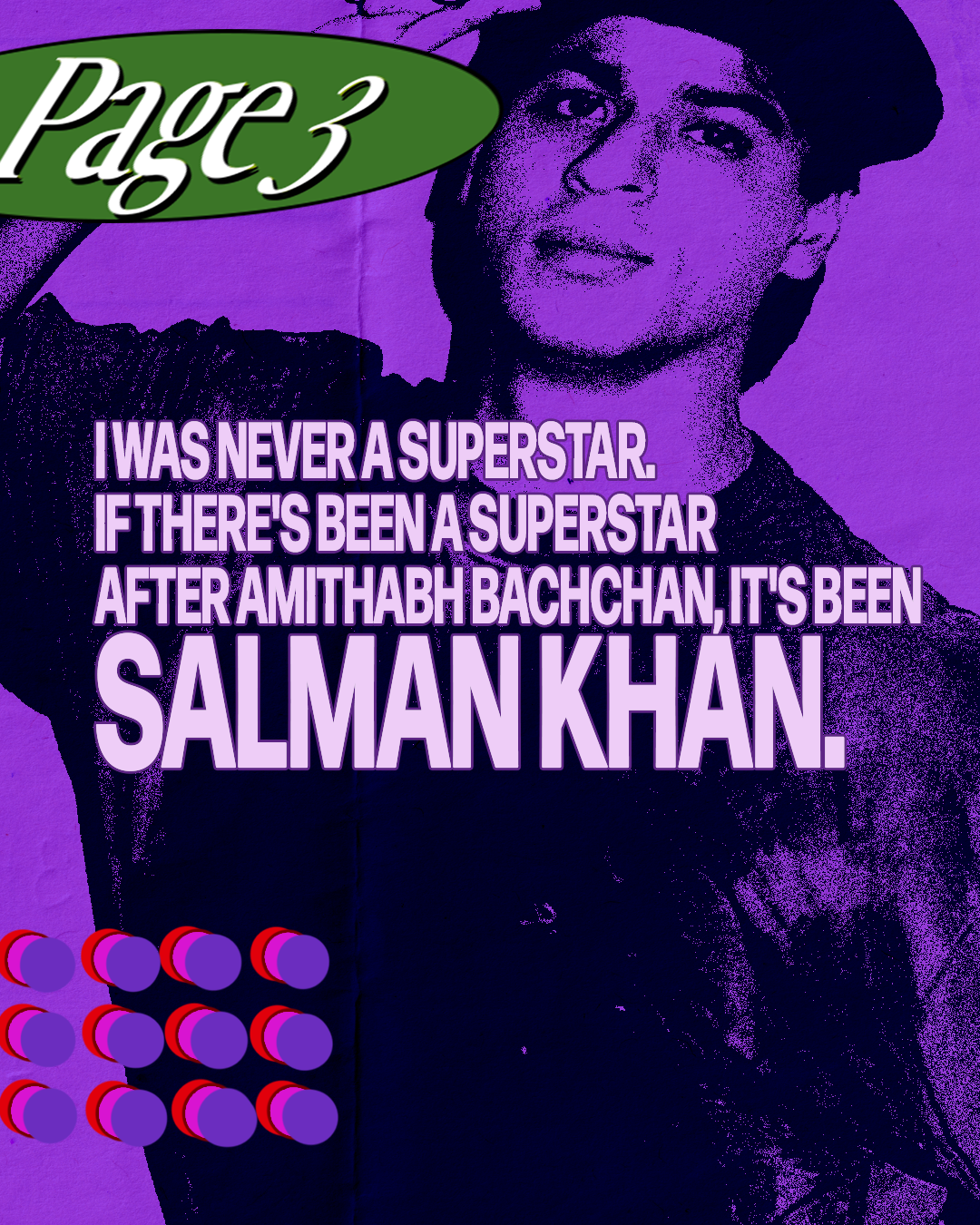
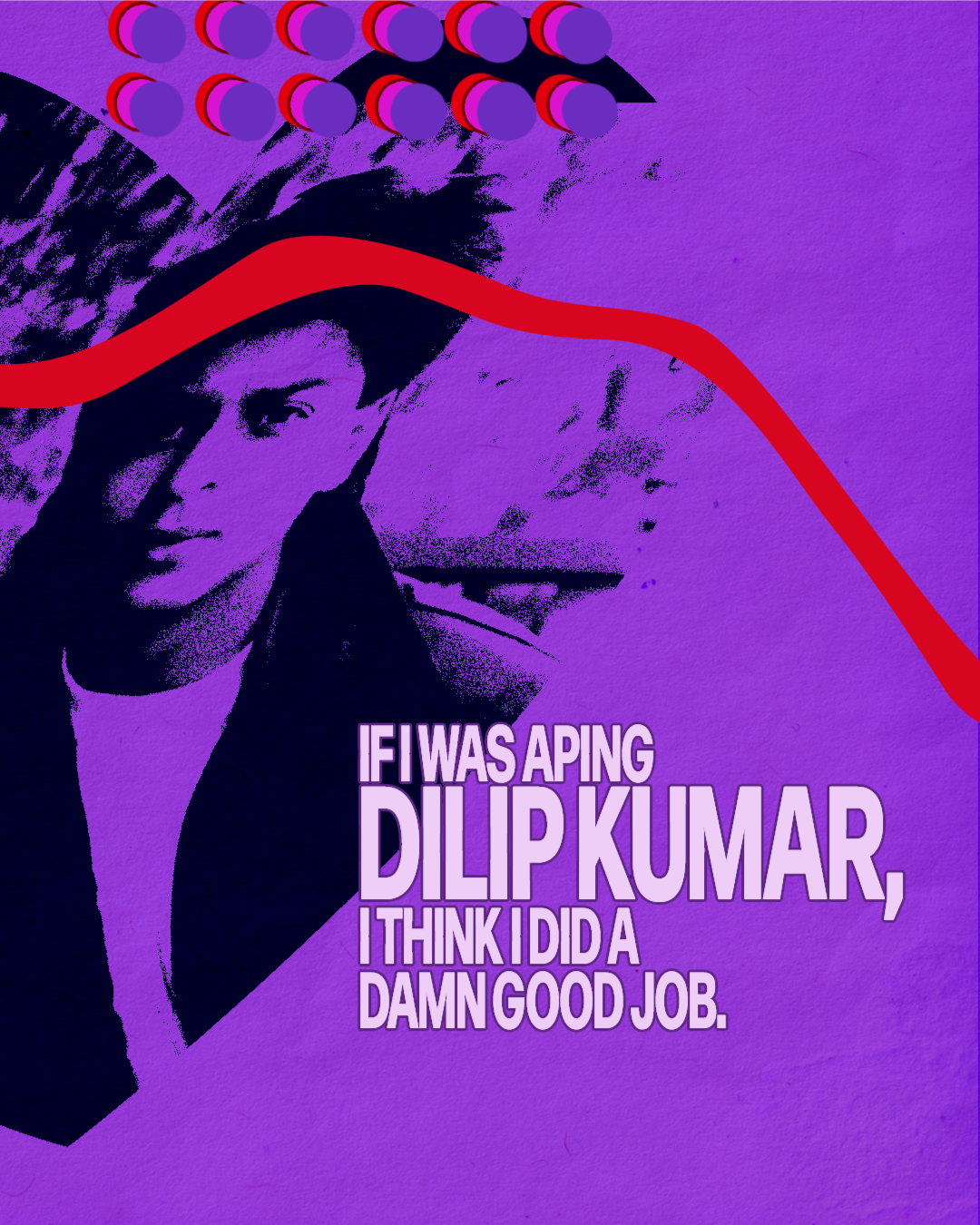
In the liberalised ’90s, to be a film journalist was to roleplay the troublesome insider. The louchest of the aspirational class, they knew more than they put in print and ensured that everyone knew they were leaving a lot out (for now). Often adversarial, they made no pretense of reporter and subject being equals, and their questions drove the stars to spiel defensively. To tattle – and to goad tattling – was the journalist’s prerogative. For a celebrity of that sacrilegious era, flush with scandal, a manicured image was unaffordable, if not impossible.
The mandate of Page Three, as Lauren Oyler writes in No Judgement about a now-defunct gossip magazine, was to “discuss the undiscussed, reveal it to be discussable.” Gossip, it would seem, was a mortal necessity. It persuaded readers that everyone was questionable, even the deific star. The journalists never let the stars play god. And the stars knew, in turn, that it was best to play along, for even their A-team of PR personnel could not match the relevance that gossip conferred. Peek behind the curtain, and access journalism would be revealed as a devil’s bargain between media and PR -- where, for a time, the former wielded the power.
Consider how gossip worked: if a star told on a peer, the teller was told on too, all the tellers telling tall tales, trading truths for trifles, tiptoeing together, testing their tenuous moral high ground. A certain Ajay goes, “I’ve never spoken against Karisma… I don’t play such games.” Karisma goes, “[Ajay] and I never had a relationship… he has kept talking about us. He is not a gentleman…” Raveena goes, “I had nothing to do with [Ajay] then, and I’ve nothing to do with [him] now…”

To feed the gossip, then, was to level the field. Hawkers, like Rupert Murdoch and Samir Jain, knew that obeisance could never sell papers. Gossip, the most sellable news, won circulation wars. In post-liberalisation India, “the third page was the place to be seen,” a veteran editor told the Hindustan Times. This was a welcome threat. To be chaffed by others could confer status, making you part of the coterie. Anyone who was someone had to play a part in Page Three to remain somebody. If you didn’t make it to the page, you were as good as dead.


If celebrities sounded defensive, it’s because the questions lobbed at them were offensive. That was entirely the point. They had to prove themselves interesting to the journalists. If they chose to be what was considered prudish, like Raveena Tandon, by pleading the fifth -- “No comment” -- they were only spurred. The gossip mongers would rake up the troupers’ dicey debts, abject affairs, and petulant pasts, all to dish them as boorish wannabes (“You’ve never been lucky in relationships. Why?”). These columnists were investigative with the hard-edged pranksterism of a satirist. To call them cruel is as limiting as it is fair. To this end, nothing and nobody prevented them from reminding stars when they were bad at what they did. You’d think dynastic names would guarantee influence, as it does today, but no one was spared. Once, the journalist interviewing Sanjay Kapoor likened the wait for his delayed film to Waiting for Godot. When Kapoor asked, “What’s that?”, the journalist shot back a dry “Never mind.” Sanjay, the subtext being, was too much of a philistine to understand.
In the late 2000s, however, the balance of power had decisively shifted in favour of PR. Journalists went from aloof interrogators to beggared pleasers, desperate for soundbites. Nari Hira’s Star Dust, once a fixture in the coterie exercising Page Three mettle, rose and fell as the industry discovered that the economics of influence demanded nothing but supplicants. Shah Rukh Khan advised a rising actress to treat critics “who charge to write positive stories” as “billboards.” Indeed, the “rate cards” sent by PR and marketing firms to producers, listing prices for positive articles, high star ratings, viral tweets, and memes, made it clear that every word, every mention was for sale.
By the time society editor Yashica Dutt arrived, a stale media order awaited her. “Page 3’s golden days had long been over,” she snarked. “Those who once lived and died to party didn’t want to be seen doing it anymore.” The murder of gossip was an inside job. Newspapers, chasing fatter margins, let anyone with clout slip past the velvet rope. The journalist’s subject no longer had to say or do anything spunky; they didn’t even have to be a star.
Today, to be a film journalist is to necessarily be deferential. It is to pander to the pre-packaged self-mythology of a star and copy-paste it, no tampering allowed. The media-managed distance of celebritydom was birthed by what we tritely call "democratisation," aka the actor’s propensity to build their own brand and be the purveyors of it. Interviews became a nice-to-have, not a must-have; to be demure became a sine qua non. There can be no stars left if actors are influencers and influencers are actors, together thinning the line of stardom. And healthy suspicion has been domesticated by PR, hastening to issue justifications, explanations, retractions.


Such statesmanship was of little concern to the ’90s film journalist. The entitlements of nepotism, for one, were fair game. “So will the famous Boney Kapoor publicity machine be working overtime?” one of them needled. To ask was to accuse. Today, such questions sound outré.
Alas, to be a star now means not talking about other stars. The actors, with all their media training, take on the accoutrements of a saint who doesn’t let anything slip unless God permits. Gossip, in its prime, was never just about them. To follow Page Three was to witness the theatre of ambition and folly in real time. For the rest of us, gossip gave us a stake in the story – someone to side with, someone to sneer at – a participatory thrill now neutered by the choreography of celebrity branding. With all its tawdriness, gossip functioned as an unofficial fifth pillar. Even if the stars weren't like the rest of us, as stars now insist, they could still be humbled to our schadenfreude. Most of all, gossip gave us the licence to judge, to appraise the star without the usual moral handwringing, and in doing so, offered a way to talk about ourselves.
"We use gossip to understand what is acceptable and what is not, what is possible and what has not yet been successfully tried," writes Oyler. Now, the republic of gossip sleeps, its prodigal children always on their best behaviour. Or so it would seem.
Is Celebrity Gossip Harming Our Social Discourse?